
I Say What I See: Parliament — A Platform for Turning People’s Voices into Reality Parliament: Bridging Citizens’ Voices and Tangible Change
By @Editor
To understand parliament, let’s look beyond the walls and into the voices it carries.
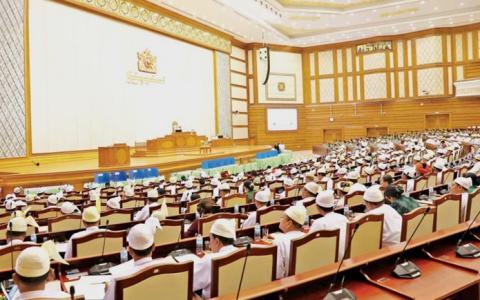
In my I Say What I See series, I often begin by turning to definitions – both at home and abroad – to better understand the essence of a subject. According to English-Myanmar dictionaries, a “parliament” is described as a ပါလီမန်၊ လွှတ်တော် of elected representatives entrusted with making laws and voicing the concerns of the people. Likewise, the Oxford and Merriam-Webster dictionaries define parliament as the highest legislative body in a country, a formal institution where public issues are debated and decisions are made. Yet beyond these formal definitions, a parliament is more than a chamber of speeches and statutes; it is, in its truest sense, a platform, where the voices, hopes, and hardships of the people are expected to be transformed into tangible reality.
From what I see, the effectiveness of a parliament cannot be measured solely by the laws it passes or the debates it hosts. Its true value lies in how well it channels the aspirations and concerns of ordinary citizens into policies that shape daily life. Observing parliamentary sessions, one notices the delicate balance between rhetoric and action, between representing diverse voices and achieving consensus. In this sense, a parliament is both a mirror and a mould: it reflects the society it serves, and simultaneously, it moulds that society through the decisions it enacts. For citizens, understanding this dual role is essential, not only to appreciate the institution but also to engage with it meaningfully.
Consider, for instance, how public concerns about education, healthcare, or local infrastructure reach the parliamentary floor. Through petitions, discussions, and committee reviews, citizens’ voices are not merely heard – they are recorded, debated, and, ideally, translated into action. In my own observations, some proposals take months or even years to materialize, highlighting the patience required in democratic processes. Yet, when a community sees tangible improvements – a school built, a road repaired, or a new policy enacted – it becomes clear that parliament can indeed serve as a bridge between the people and practical change. It is in these moments that the abstract definitions found in dictionaries come alive, and the parliament transforms from a formal institution into a living, responsive platform for the public.
Ultimately, a parliament’s true measure lies not in its walls or procedures, but in its ability to translate the collective voices of the people into real, tangible outcomes. It is a living platform, sometimes slow, sometimes imperfect, but one that holds the promise of connection between citizens and governance. Observing it closely, one realizes that every debate, every motion, and every decision carries the potential to shape lives, communities, and the nation itself. For those who engage with it thoughtfully, a parliament is more than a legislative body; it is a reflection of society’s will and a stage where the aspirations of the people can, if nurtured carefully, become reality.
A parliament is not just an institution; it is the voice of the people in action.
#TheGlobalNewLightOfMyanmar