
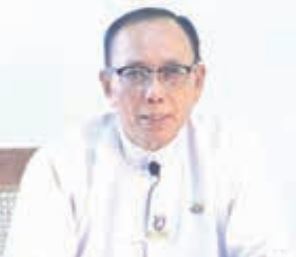
U Hla Thein Rakhine State Advocate-General and state government spokesperson
MY name is U Hla Thein. I am also the Advocate-General of Rakhine State. I am also the spokesperson of the Rakhine State government. I have to speak about these Bengali camps. In our Rakhine State, the conflicts between the Bengalis and the Rakhine were quite severe and on a large scale in 2012.
After that, we began establishing the Bengali camps to the west of Sittway. They were built jointly by the government and NGOs. At that time, there were 14 camps, and the population was quite large. As of today, based on my own experience, I am saying this. At that time, I was also serving as the Advocate-General. Now, I have again been assigned the responsibility to serve as the Advocate-General here, so regarding these matters, I have been very directly involved in the work myself. That is why I know them well.
So, regarding the camps, teams were formed for each camp, and state-level departmental heads were assigned as team leaders to carry out the work. Regarding healthcare in those camps, starting from that time, mobile medical teams have been going around and providing medical treatment every month. Later on, we provided rural health services. And in Thetkaepyin, we built a station hospital with a capacity of sixteen beds.
Regarding medical treatment, if people from the Bengali camps and Bengali villages needed to be admitted to the Sittway General Hospital during the time of conflict, the government, in cooperation with the Red Cross, arranged for the patients to be treated at the Sittway Hospital. As for the education sector as well, there are many villages in that area. Since there are also camps, there are about 22 schools in total, including primary, middle, and high schools. The highest level is the Thetkaepyin High School. If students pass primary school, there is a post-primary school there.
There is a middle school as well, and then they can continue to the Thetkaepyin High School. Last year, students from this high school passed the matriculation examination with distinctions in three subjects. There are also Bengalis who passed from the Thetkaepyin School and are now studying at the Sittway University. Therefore, in terms of education, it is not bad. Regarding food supplies, they are provided by NGOs, especially by the WFP (World Food Programme). The state government also cooperates and participates in assisting. UNHCR also provides support. His main focus is on ensuring access to clean drinking water and, secondly, on housing in good condition for rehabilitation.
In some periods, there were also fires caused by negligence, so the camps had to be rebuilt. Recently, ten blocks were burned down in Say Tha Mar Gyi village, where we went. Each block contained 18 houses, making a total of shelters for 180 families. So we arranged temporary accommodation for them. Now, the rebuilding is underway, and by the end of this month, we will have resettled everyone. Especially in terms of medical treatment, at present, there aren’t any checkpoints restricting movement. At the Sittway Hospital as well, there are quite a large number of them. Just recently, a Buddhist monk came to the Sittway Hospital and provided support and assistance to the patients. You will see many Bengalis at the hospital. “Impala’ is the Myanmar name, which is 'Aung Mingala'.
In 2012, there were conflicts. In 2013 and 2014, depending on the situation of those conflicts, we set up barricades in cooperation with Tatmadaw and the police around this village and checked and controlled the entry and exit of people. The main reason was that there was only one Bengali quarter among the Rakhine quarters, so we were protecting them. It is heard that the barricades have been removed since 2014. At that time, the Chief Minister was Maj-Gen Maung Maung Ohn. When U Maung Maung Ohn was serving as Chief Minister, the American billionaire George Soros visited. We were there as well.
During that period of time, there were still barricades in place. After that, from 2014 onwards, there were no more barricades. Now, in that village, Rakhine people also freely go in and out. Bengalis are also able to move around and travel freely. In general, Bengalis and Rakhine have lived together here throughout history.
During the periods when they lived together, there were social issues and problems. When conflicts occurred, there were resentments and problems. However, at the same point, those issues eventually fade away and are resolved. Now, both sides are living calmly and peacefully. The living conditions, healthcare, education, and overall social and economic well-being of the Bengalis are also good. You can also see them opening large shops and doing business in areas like Thae Chaung and Ta Paing.
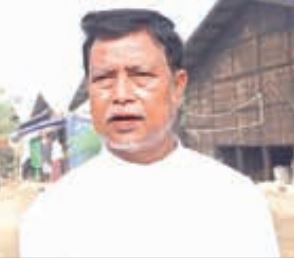
U Kyaw Thein Maung (a) Mamauk Amee
Camp member of the Khaungdukka IDP Camp
MY name is U Kyaw Thein Maung, (aka) Mamauk Amee. This camp was established in 2012. In that year, the government and NGOs worked together to build it for us. After it was built, we faced difficulties once again. On 1 March 2025, a fire broke out, and the camp was burned. After the fire, the Rakhine State government came and helped us a great deal. They provided both money and relief supplies, and they also cooked and distributed meals for us.
I am the camp leader. Among the 15 members of the committee, I am the most senior. The Rakhine State government gave us very strong support. On the very day the fire broke out, they came in the morning with fire trucks and extinguished the fire. Then again, in the afternoon, around 4 pm, they came to put out the fire, provided water, and also cooked and served food to us. They cooked and provided meals for us for two to three days, and then they helped us a great deal by giving both rice and money so that every household could cook for themselves.
There are 50 buildings in the camp, with a total of 400 rooms. I have seven children. Three of them are already married: one daughter and two sons. The remaining four are not married yet. We are proud of the Rakhine State government. Government teams that conduct household assessments supervise and take care of us. We heard that rebuilding the camp after the fire cost more than two billion kyats. After the fire, they first provided us with temporary shelter using tarpaulin tents. With the government’s own budget, they rebuilt the camp for us. Now that the reconstruction is complete, we are able to live in these new buildings. All of this assistance was provided by the Rakhine State government in cooperation with NGOs.
News Team
#TheGlobalNewLightOfMyanmar